How Protective Inserts Improve Product Safety Throughout the Supply Chain
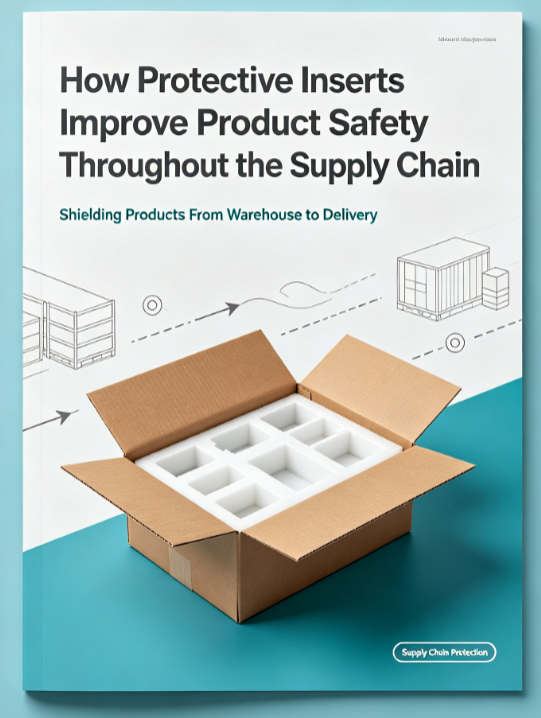
Table of Contents
1. The Real Cost of Supply Chain Damage
2. What Are Protective Inserts?
3. How Protective Inserts Prevent Damage
4. Material Selection: What Actually Matters
5. The Engineering Behind Effective Inserts
6. Industry Standards and Testing
7. Case Study: 75% Damage Reduction in Practice
8. The Hidden Costs of "Cheap" Inserts
9. Frequently Asked Questions
10. Final Thoughts
1. The Real Cost of Supply Chain Damage
Let me start with something that keeps supply chain managers up at night.
The numbers are sobering.
In 2024 alone, 85 million packages arrived damaged in the United States—a 30% increase from the previous year. That trend didn't reverse in 2025. Industry-wide losses from shipping damage now sit at roughly $4 billion annually.
And here's the thing—those are just the direct costs.
The real hit goes much deeper.
According to recent analysis, global logistics losses linked to freight damage are estimated at $50-60 billion annually. That's not a typo. We're talking about tens of billions of dollars disappearing from supply chains every single year.
Poor packaging alone causes 40% of damaged goods in e-commerce. Forty percent. Think about that for a second. Nearly half of all shipping damage could be prevented with better packaging decisions.
Here's what that looks like in practice:
The average LTL (less-than-truckload) damage rate sits at 1.94%—roughly one in every 51 shipments
Average damage claims run approximately $3,777 each
In LTL freight environments, damage rates of 5% to 8% are not uncommon for fragile or mixed loads
As much as 11% of unit loads arriving at distribution centers experience some level of case damage
And returns? Global returns were projected to reach $850 billion in 2025. Every damaged shipment triggers what the industry calls a "cascade of hidden costs"—reprocessing, duplicate freight, wasted inventory, and eroding customer trust.
I've seen companies spend weeks negotiating a few cents off their packaging costs, only to discover later that transportation damage was costing them ten times what they "saved." It's one of the most common mistakes in procurement.
That's where protective inserts come in.
2. What Are Protective Inserts?
Protective inserts are internal packaging components designed to secure products within their outer shipping containers. They're the difference between a product that arrives intact and one that doesn't.
Think of them as the suspension system for your product during its journey through the supply chain.
The basic function is straightforward: protective inserts immobilize the product, preventing movement and absorbing shocks that would otherwise transfer directly to the item being shipped. But the engineering behind them is anything but simple.
A well-designed protective insert does several things simultaneously:
It fills void spaces inside the package, preventing the product from shifting
It absorbs and dissipates impact energy
It distributes pressure evenly across the product's surface
It maintains consistent positioning throughout multiple handling cycles
Common types of protective inserts include foam pads, molded pulp trays, die-cut corrugated dividers, air pillows, and custom-engineered plastic or composite structures. The right choice depends entirely on the product—its weight, fragility, geometry, and the conditions it will face during transit.
What makes protective inserts different from generic void fill or loose fill materials? It's the precision. Generic fillers like bubble wrap or packing peanuts provide a basic level of cushioning, but they don't secure the product in a fixed position. The product can still shift, rotate, or migrate within the package during rough handling.
Protective inserts, by contrast, are engineered to hold the product exactly where it needs to be.
3. How Protective Inserts Prevent Damage
Let me walk you through what actually happens to a product during shipping.
When a package moves through the supply chain, it encounters a series of hazards:
Drops – from conveyor belts, loading docks, or during manual handling
Vibration – from trucks, planes, and conveyor systems
Compression – from stacking in warehouses and trailers
Shock – from sudden impacts during loading and unloading
Environmental stress – temperature fluctuations, humidity, and condensation
Each of these hazards can damage a product in different ways.
A drop might crack a housing or shatter a screen. Vibration can loosen internal components or cause abrasion between parts. Compression can deform packaging and transfer pressure directly to the product. Humidity can compromise corrugated packaging, reducing its strength by 50-60%.
Protective inserts address each of these hazards systematically.
Shock Absorption
When a packaged product is dropped, the energy from the impact has to go somewhere. Without proper cushioning, that energy transfers directly to the product.
Protective inserts made from materials like expanded polyethylene (EPE), polyurethane (PU), or engineered corrugated structures compress during impact, absorbing much of the energy before it reaches the product. The cellular structure of foam materials, in particular, traps air in closed cells that act as microscopic shock absorbers.
Movement Prevention
This is where protective inserts really shine.
Products that shift inside their packaging during transit are significantly more likely to suffer damage. They collide with each other, with the container walls, or with whatever else is in the package.
A custom-engineered protective insert holds the product in a fixed position. It creates a snug fit that prevents lateral movement, rotation, and vertical displacement. By minimizing the risk of shifting, protective inserts significantly reduce impact damage.
Pressure Distribution
Stacking is a fact of life in logistics. Pallets are stacked in warehouses. Boxes are stacked in trailers. The product at the bottom of the stack bears the weight of everything above it.
Protective inserts distribute this pressure evenly across the product's surface, preventing localized stress points that could cause deformation or breakage. This is particularly important for products with large, flat surfaces or delicate protrusions.
Moisture and Environmental Protection
Some protective insert materials also provide a barrier against moisture and contaminants. Closed-cell foams, for example, absorb very little water—typically less than 1%—making them suitable for products that may encounter humidity or condensation during international shipping.
4. Material Selection: What Actually Matters
Choosing the right material for protective inserts isn't as simple as picking the cheapest option or the one that looks most impressive.
The material determines the insert's performance characteristics—how much shock it can absorb, how well it recovers after compression, how it handles moisture, and how it performs over repeated use cycles.
Here's a quick comparison of common protective insert materials:
Material | Key Properties | Best For |
EPE Foam (Expanded Polyethylene) | Lightweight, closed-cell, low moisture absorption (~<1%), density typically 25-30 kg/m³ | General-purpose protection, electronics , lightweight consumer goods |
EVA Foam (Ethylene-Vinyl Acetate) | Durable, flexible, good compression recovery, available in ESD-safe grades | High-end electronics, medical devices, tools |
PU Foam (Polyurethane) | Excellent shock absorption, conforms to complex shapes | Fragile items, irregular geometries , premium products |
Corrugated Cardboard | Recyclable, cost-effective, good structural strength | E-commerce, lightweight products, F-sustainable packaging |
Molded Pulp | Eco-friendly, biodegradable, good for odd shapes | Sustainable packaging, consumer goods , electronics |
The density of foam materials, for instance, directly affects their cushioning performance. EPE foam typically ranges from 25-30 kg/m³ for general applications, while higher densities provide greater compression resistance for heavier products.
Here's the key insight that many buyers miss:
The "best" material isn't the one with the highest specs. It's the one that matches your product's specific requirements—weight, fragility, shipping conditions, and cost constraints.
5. The Engineering Behind Effective Inserts
A protective insert isn't just a piece of foam or cardboard. It's an engineered component.
The difference between a generic insert and a properly engineered one often shows up in the results. Companies that switch to engineered protective inserts often see reductions in breakage claims and return rates of 20-40%.
So what goes into engineering an effective protective insert?
Understanding the Product
This sounds obvious, but you'd be surprised how often it's overlooked.
Every product has different vulnerabilities. A heavy, rugged industrial component needs different protection than a lightweight,精密 electronic device. A product with protruding buttons or switches needs different consideration than one with a smooth, flat surface.
The engineering process starts with understanding:
Product weight and dimensions
Fragility and critical failure points
Surface finish requirements (scratch prevention)
ESD sensitivity (for electronics)
Temperature sensitivity
Expected shipping environment
Drop Height and Fragility Assessment
This is where the science comes in.
Packaging engineers typically assess the product's fragility—the maximum G-force it can withstand without damage. They then design the protective insert to keep the product within that limit during expected drop heights.
A standard drop height might be 24-36 inches for manual handling, or higher for automated systems. The insert's material, thickness, and geometry are all calculated to provide the necessary cushioning within those parameters.
Testing and Validation
This is the step that too many companies skip.
A protective insert that looks great on paper might fail in the real world. That's why professional manufacturers test their designs using established standards.
The International Safe Transit Association (ISTA) provides globally recognized standards for measuring packaging effectiveness. ISTA testing involves subjecting packaged products to controlled laboratory simulations that mimic real-world transportation hazards—drops, vibrations, compression, and environmental conditions.
Similarly, ASTM D4169 is a widely adopted standard for evaluating shipping containers and systems. It defines 18 different distribution cycles that simulate specific logistics scenarios.
Testing validates the package design and reduces the risk of logistics failures. Companies that test their packaging before full production consistently see lower damage rates and lower reverse logistics costs.
6. Industry Standards and Testing
If there's one thing I'd emphasize to anyone sourcing protective inserts, it's this: don't skip the testing phase.
The packaging industry has established robust testing standards for good reason. These standards provide a common language for evaluating packaging performance and reducing risk.
ISTA Standards
ISTA (International Safe Transit Association) has developed a series of standards for different types of transportation, products, and buyer requirements. These standards simulate the various hazards packages encounter during distribution—vibration, shock, compression, and environmental stress.
Common ISTA test sequences include:
ISTA 1 Series – Basic performance testing for packaging materials
ISTA 2 Series – Partial simulation performance testing
ISTA 3 Series – General simulation performance testing
ISTA 6 Series – Member-specific performance testing
ASTM D4169
ASTM D4169 is one of the most widely recognized standards for transport packaging testing. It provides a framework for evaluating shipping units using established test methods at levels representative of actual distribution conditions.
The standard defines 18 different distribution cycles covering various logistics scenarios. Each cycle includes a sequence of tests—drops, vibration, compression, atmospheric conditioning—that mirror what a package actually experiences in a specific supply chain.
One important note: ASTM D4169-22 is the latest version and is recognized by the FDA and CE registrations.
Why Testing Matters
Testing isn't just a compliance exercise. It's a risk management tool.
By validating a package design before production, companies can identify potential weaknesses and fix them before they cause damage. This reduces costs associated with replacement and reverse logistics.
I've seen companies skip testing to save a few thousand dollars, only to discover later that their packaging failed in the field—costing them ten times that amount in damage claims and customer dissatisfaction.
7. Case Study: 75% Damage Reduction in Practice
Let me share a real example that illustrates what's possible with well-designed protective inserts.
The company: FALELOKIKOKI, a leading Polish distributor of professional cosmetics and hairdressing products.
The challenge: The company's product range varied widely in shape, weight, and size—making safe shipment a persistent challenge. Their previous approach, bulk packaging with assorted fillers, failed to provide consistent protection. Some orders were arriving damaged.
The solution: Smurfit Westrock developed and implemented a single-piece corrugated insert that divided the package interior into multiple sections. This system kept products secure and organized regardless of their dimensions. Designed as a universal solution, the insert adapted seamlessly to the company's wide range of products.
The results: The new insert dramatically improved delivery quality:
Transport-related damage and complaints reduced by 75%
Packaging process became 50% faster and more efficient
Elimination of adhesive tape, foil, and plastic fillers lowered the carbon footprint
Substantial cost savings through reduced packaging material usage
This isn't an isolated example. Across automotive, electronics, industrial, and consumer goods sectors, custom-engineered protective inserts are delivering measurable results.
8. The Hidden Costs of "Cheap" Inserts
Here's something I wish more procurement professionals understood.
The cheapest protective insert is almost never the most cost-effective one.
Packaging materials are rarely evaluated against their complete cost. Many teams track what they spend on materials, but the downstream costs—freight claims, product replacements, rework, and labor inefficiencies—are usually sitting in separate budget lines with no clear connection to the packaging decision that caused them.
Let me break down what the Total Cost of Ownership (TCO) for protective inserts actually looks like:
Direct Costs
Material cost per insert
Tooling and setup costs
Shipping and storage
Indirect Costs
Labor for packing and unpacking
Damage rates and claims
Returns processing and reverse logistics
Customer service and reputation impact
Inventory write-offs
A "cheap" insert that fails to protect the product can generate enormous indirect costs. Conversely, a more expensive insert that reduces damage rates can save money overall.
The math is straightforward: if an engineered insert costs 20% more but reduces damage by 40%, it's the better financial choice. Every time.
9. Frequently Asked Questions
What's the difference between protective inserts and void fill?
Protective inserts are engineered to hold products in a fixed position and absorb shocks. Void fill materials like packing peanuts or air pillows simply fill empty space. Inserts provide consistent, predictable protection; void fill is less reliable and can shift during transit.
How do I know what material to choose?
The right material depends on your product's weight, fragility, shipping conditions, and budget. Foam provides the best shock absorption for fragile items. Corrugated inserts work well for lighter products and offer better sustainability. Molded pulp is an eco-friendly option for many consumer goods.
Can protective inserts be reused?
Yes. Many protective inserts—particularly those made from durable foams or plastics—can be reused multiple times in returnable packaging systems. Reusable inserts can significantly reduce waste and lower long-term packaging costs.
What testing should I require from my supplier?
Look for suppliers who test their designs against established standards like ISTA or ASTM D4169. These standards validate that the packaging will perform under real-world shipping conditions. Ask for test reports and, where possible, conduct your own validation testing.
Are protective inserts sustainable?
It depends on the material. Corrugated and molded pulp inserts are biodegradable and widely recyclable. Foam inserts can be made from recyclable materials and, when designed for reuse, can significantly reduce packaging waste. However, sustainability credentials vary by material and local recycling infrastructure.
How much can protective inserts reduce damage?
The results vary by application, but reductions of 20-40% in damage-related returns are commonly reported when switching from generic to engineered protective inserts. In some cases, reductions of 75% or more are achievable.
10. Final Thoughts
If there's one thing I've learned from years in this industry, it's this: protective inserts are not an expense. They're an investment.
The global protective packaging market was valued at $35.64 billion in 2025 and is projected to reach $58.61 billion by 2032. That growth isn't happening because companies enjoy spending money on packaging. It's happening because they've done the math and realized that effective protection saves money in the long run.
A well-designed protective insert does more than prevent damage. It supports automated production lines, reduces shipping costs through right-sizing, improves customer satisfaction, and can even support sustainability goals through reuse and recycling.
The key is to approach protective inserts as an engineering problem, not a commodity purchase.
That means understanding your product's vulnerabilities. Testing your packaging against real-world conditions. Working with suppliers who can provide more than just a price quote—who can offer engineering support, material expertise, and validation testing.
The companies that take this approach consistently see fewer damaged shipments, lower logistics costs, and happier customers.
And in today's supply chain environment, that's worth more than saving a few cents on an insert.